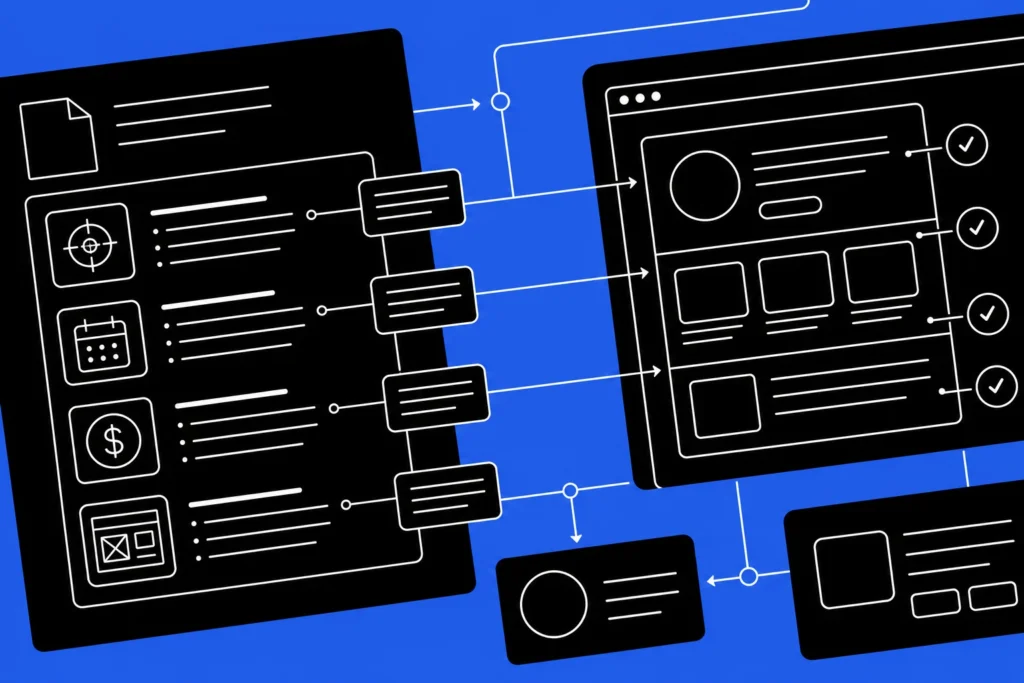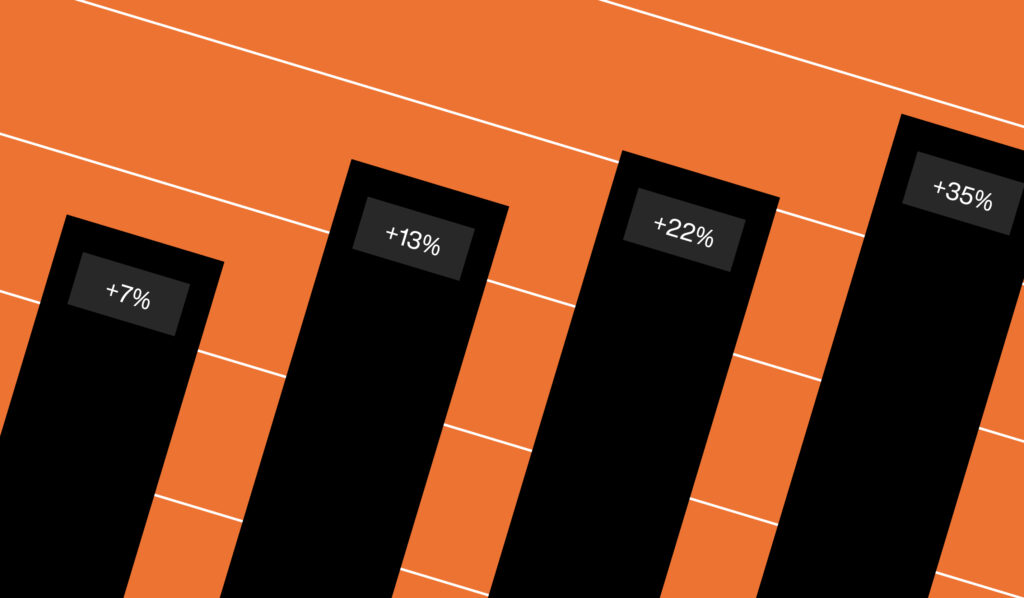

Website redesigns fail when design, SEO, development, and conversion strategy are treated as separate projects. The best website redesign agencies combine all four so a new site can protect rankings, improve lead flow, and support long-term growth.
A redesign that focuses only on aesthetics is a liability. Companies launch better-looking websites and watch their organic traffic drop, their lead volume fall, and their conversion rates stagnate. It happens because most design agencies don’t think about redirects, metadata, content preservation, or conversion paths until after launch, if at all.
The right agency does not just build a new site. It builds a site that performs better than the one it replaced.
This ranked list evaluates twelve agencies based on SEO integration, conversion strategy, custom development capability, post-launch growth support, and proven results. The goal is to help marketing leaders, founders, and growth executives find the right partner for their specific redesign scenario, whether that’s an enterprise SEO program, a B2B lead generation overhaul, an eCommerce rebuild, or a complex multi-audience site.
The agencies on this list were selected based on publicly available capabilities, service positioning, case studies, specialization, and demonstrated fit for redesign projects where search performance and conversion outcomes matter.
Quick Comparison of the Best Website Redesign Agencies
The table below gives a fast overview of each agency’s primary strength, core services, and ideal client type. Full profiles follow in the next section.
| Agency | Best For | Core Strengths | Ideal Client Type |
|---|---|---|---|
| WebFX | Large-scale SEO and digital marketing programs | SEO, PPC, web design, proprietary tech (RevenueCloudFX) | Mid-market to enterprise, B2B and B2C |
| Blennd | Redesigns needing SEO, CRO, custom dev, and post-launch growth | Custom design, SEO strategy, CRO, technical development, analytics | Growth-stage B2B, SaaS, healthcare, professional services |
| SmartSites | Web design plus broad digital marketing execution | Web design, SEO, PPC, social media | Small to mid-market businesses |
| OuterBox | eCommerce website redesign and SEO | eCommerce development, SEO, paid media | eCommerce brands, retail, DTC |
| Directive | B2B SaaS and performance marketing alignment | SEO, paid media, RevOps, pipeline reporting | Enterprise SaaS, B2B tech companies |
| Thrive | Small to mid-sized businesses needing web design and SEO | Web design, local SEO, content marketing | SMBs, local and regional businesses |
| Bop Design | B2B branding and website redesign | B2B brand strategy, web design, content | B2B companies focused on brand positioning |
| Huemor | UX-led redesigns and brand storytelling | UI/UX, web design, full-stack development, copywriting | B2B companies prioritizing brand and UX |
| Clay | Premium digital product and UX design | UX/UI design, product design, branding | Tech companies, SaaS products, digital-first brands |
| Intechnic | UX research and conversion-focused redesigns | UX research, CRO, usability testing, information architecture | Organizations needing research-backed redesign decisions |
| Lounge Lizard | Brand-forward website design | Brand strategy, web design, creative | Companies prioritizing brand differentiation |
| UPQODE | WordPress-focused redesigns | WordPress development, SEO, web design | SMBs and mid-market companies on WordPress |
How We Selected the Best Website Redesign Agencies
This list is based on publicly available capabilities, service positioning, case studies, client portfolios, third-party reviews, and demonstrated fit for redesign projects where SEO and conversion performance are primary success metrics. Agencies were not paid to be included, and rankings reflect our editorial assessment of each agency’s strengths relative to specific redesign scenarios.
Each agency was evaluated across six criteria:
Evaluation Criteria
-
SEO integration: Does the agency account for technical SEO, redirect mapping, metadata preservation, content migration, internal linking, and crawlability during a redesign? Or does SEO get bolted on after design decisions are already made?
-
Conversion strategy: Does the agency improve lead flow, UX paths, calls to action, landing page structure, form design, and conversion tracking as part of the redesign process?
-
Custom design and development: Does the agency offer custom UX, design systems, CMS implementation, and development support? Or does it rely primarily on templates and off-the-shelf themes?
-
Post-launch growth: Does the agency continue supporting SEO, analytics, CRO, content, and performance after the site goes live? Or does the relationship end at launch?
-
B2B and complex-site experience: Does the agency have demonstrated experience with organizations where redesigns directly affect lead generation, search performance, and buyer journeys?
-
Proof and credibility: Does the agency show case studies, recognizable clients, third-party reviews on platforms like Clutch or DesignRush, or measurable outcomes that can be independently verified?
Important note: No agency on this list is a perfect fit for every type of redesign. The goal of this guide is to match each agency to the scenario where it performs best, so you can evaluate partners based on your specific situation rather than a generic ranking.
The Best Website Redesign Agencies for SEO, Conversion, and Growth
The twelve agencies below represent a range of specializations, from large full-service platforms to focused boutique firms. Each profile explains what the agency does well, where it has limitations, and which type of redesign project it fits best.
1. Blennd
Best for: Redesigns that need SEO, CRO, custom development, and post-launch growth
Why Blennd stands out: Blennd combines website redesign, SEO, and conversion strategy into one integrated process. Rather than treating design, development, and marketing as separate workstreams, Blennd builds them together from the start. That makes it a strong fit for companies that need more than a visual refresh and cannot afford to separate strategy, UX, SEO, CRO, and development across multiple disconnected vendors.
Blennd is especially relevant when rankings, lead generation, analytics, and buyer journeys need to be protected or improved during a redesign. The agency has launched 250+ websites and completed 300+ redesigns, audits, and strategy projects across B2B technology, healthcare, SaaS, higher education, and professional services. Client results include a 58% increase in ranking keywords for GoTu, an 88% increase in organic keywords for Moody Insurance, and a 317% increase in conversions across multiple engagements.
Work like the Moody Insurance website redesign and the GoTu website redesign project show how Blennd approaches complex B2B and dual-audience sites where SEO and conversion performance are non-negotiable outcomes.
Strengths:
-
Custom web design and development
-
SEO-informed redesign strategy built in from day one
-
Conversion-focused UX and page planning
-
Technical SEO and migration support
-
Post-launch growth strategy and ongoing optimization
-
Experience across complex B2B, healthcare, SaaS, and growth-focused sites
-
Integrated approach: strategy, UX, SEO, CRO, and development under one roof
Potential limitations: Blennd is a stronger fit for companies that need a strategic custom redesign than for businesses looking for a low-cost template website or a basic design refresh. Project scope and investment reflect the depth of the integrated process.
Best fit: Growth-focused B2B companies, SaaS organizations, healthcare brands, and professional services firms that want their website redesign to improve search visibility, conversion performance, and long-term digital growth. Blennd works as a custom web design agency and conversion rate optimization agency in one engagement.
2. WebFX
Best for: Large-scale SEO and digital marketing programs
Why they stand out: WebFX is one of the largest performance marketing agencies in the United States, with a team of 500+ specialists and a proprietary technology platform called RevenueCloudFX. Their web design practice is built around SEO and paid media integration, making them a strong option for mid-market to enterprise companies that want a single agency to manage a large-scale redesign alongside ongoing digital marketing programs. They publish extensive case studies and pricing transparency that most agencies avoid, which makes them easier to evaluate as a vendor.
Strengths:
-
Large team with specialists across SEO, PPC, web design, and content
-
Proprietary RevenueCloudFX platform for attribution and reporting
-
SEO and paid media integrated into redesign projects
-
Strong track record across B2B and B2C industries
-
Transparent pricing and detailed case study library
Potential limitations: WebFX’s size means clients may work with account managers rather than senior strategists on a day-to-day basis. Companies with highly custom development requirements or complex B2B buyer journeys may find a more specialized partner delivers better strategic depth.
Best fit: Mid-market to enterprise companies that need a high-volume redesign managed alongside an active SEO and paid media program, particularly those in B2B services, healthcare, and eCommerce.
3. SmartSites
Best for: Businesses wanting web design plus broad digital marketing execution
Why they stand out: SmartSites has built a strong reputation as a full-service digital marketing agency that combines web design with SEO, PPC, email marketing, and social media. They have a large volume of client reviews on Clutch and other platforms, and they serve a broad range of industries. For companies that want a single agency to handle their redesign and ongoing marketing programs without the complexity of an enterprise-level engagement, SmartSites offers a practical option.
Strengths:
-
Strong Clutch ratings and high volume of verified client reviews
-
Web design paired with SEO and PPC execution
-
Broad industry coverage across B2B and B2C
-
Transparent pricing and process communication
Potential limitations: SmartSites serves a wide range of clients, which can mean less specialization for complex B2B or technical redesigns. Companies with highly custom development requirements or deep SEO migration needs may need a more specialized partner.
Best fit: Small to mid-market businesses that need a reliable agency to handle a redesign alongside ongoing SEO and paid media, particularly those in professional services, home services, and retail.
4. OuterBox
Best for: eCommerce website redesign and SEO
Why they stand out: OuterBox has built a focused practice around eCommerce development and SEO. Their team works across platforms including Shopify, WooCommerce, Magento, and BigCommerce, and they have a strong track record of improving organic rankings and conversion rates for online retailers. For companies where eCommerce is the primary revenue channel, OuterBox brings a level of platform-specific depth that generalist agencies often lack.
Strengths:
-
Deep eCommerce platform expertise across major CMS and commerce systems
-
SEO integrated into eCommerce development and migration
-
Conversion rate optimization for product pages, checkout flows, and category pages
-
Paid media support alongside organic programs
Potential limitations: OuterBox’s specialization in eCommerce means it may not be the strongest fit for B2B service companies, SaaS organizations, or content-heavy sites where the redesign is focused on lead generation rather than transaction volume.
Best fit: Retail brands, DTC companies, and eCommerce businesses that need a redesign tied to improved search rankings, product discoverability, and online revenue.
5. Directive
Best for: B2B SaaS and performance marketing alignment
Why they stand out: Directive has positioned itself as a performance marketing agency for B2B SaaS and technology companies, with a methodology focused on pipeline and revenue rather than traffic and MQL volume. Their “Customer Generation” framework aligns SEO, paid media, and creative around qualified pipeline metrics. For enterprise SaaS companies that need their website redesign tied directly to sales funnel performance and CRM attribution, Directive brings a level of strategic rigor that most design agencies cannot match.
Strengths:
-
Pipeline-focused SEO and paid media strategy for B2B SaaS
-
Strong financial modeling and CFO-ready reporting
-
Technical SEO integrated with RevOps and CRM systems
-
AI-powered intelligence platform (Stratos) for cross-channel clarity
Potential limitations: Directive’s positioning is explicitly focused on enterprise SaaS and technology companies. Organizations outside that segment, particularly those in professional services, healthcare, or eCommerce, may find the methodology less applicable to their buyer journey.
Best fit: Enterprise B2B SaaS and technology companies that need their website redesign aligned with pipeline generation, sales attribution, and revenue reporting.
6. Thrive Internet Marketing Agency
Best for: Small to mid-sized businesses needing web design and SEO together
Why they stand out: Thrive is a full-service digital marketing agency with a broad geographic footprint and a long track record of serving small to mid-sized businesses. They combine web design with local SEO, content marketing, and paid media, making them a practical option for companies that need a redesign without the complexity or investment of a larger agency engagement.
Strengths:
-
Web design paired with local and national SEO
-
Content marketing and social media alongside redesign projects
-
Broad industry coverage with accessible pricing
-
Large team with specialists across multiple service areas
Potential limitations: Thrive’s broad scope and high volume of clients can mean less customization and strategic depth for complex redesigns. Companies with advanced technical SEO requirements or multi-audience site architecture needs may need a more specialized partner.
Best fit: Small to mid-sized businesses in professional services, home services, healthcare, and retail that need a redesign alongside an ongoing digital marketing program.
7. Bop Design
Best for: B2B branding and website redesign
Why they stand out: Bop Design is a boutique B2B marketing agency that focuses specifically on branding, web design, and content for B2B companies. Their work is built around the idea that B2B websites need to communicate credibility, authority, and differentiation to a specific buyer audience. For companies where brand repositioning is as important as conversion performance, Bop Design offers a focused perspective.
Strengths:
-
Focused B2B brand strategy and messaging
-
Web design built around B2B buyer psychology
-
Content strategy and copywriting integrated with design
-
Smaller agency model with closer client relationships
Potential limitations: Bop Design is primarily a brand and design agency. Companies that need deep technical SEO, custom development, or post-launch growth programs may need to supplement with additional partners.
Best fit: B2B companies that are repositioning their brand, entering a new market, or need their website to clearly communicate a differentiated value proposition to a specific professional audience.
8. Huemor
Best for: UX-led redesigns and brand storytelling
Why they stand out: Huemor is a web design agency that emphasizes UX, brand storytelling, and conversion-focused design for B2B companies. They handle strategy, copy, design, and development as a single engagement, and they offer a 20% organic growth guarantee on SEO programs. Their Clutch rating of 4.8 across 72 reviews reflects a strong track record of client satisfaction and on-time delivery.
Strengths:
-
Integrated UX, copywriting, design, and development
-
B2B specialization with a focus on lead generation
-
Strong Clutch reviews for communication and project management
-
SEO optimization included alongside design work
Potential limitations: Huemor is a smaller agency, which means capacity can be a factor for large or complex redesigns. Companies with significant technical development requirements or multi-site architectures may need a larger team.
Best fit: B2B companies that want a redesign focused on UX, brand narrative, and lead generation, particularly those where the current website lacks clear messaging or a compelling user journey.
9. Clay
Best for: Premium digital product and UX design
Why they stand out: Clay is a design agency known for high-quality UX/UI work on digital products, SaaS applications, and brand-forward websites. Their work is frequently cited on Clutch as a top UX/UI design firm, and they bring a level of design craft that suits companies where the visual and interactive experience is a primary competitive differentiator.
Strengths:
-
Premium UX/UI and product design
-
Strong branding and visual identity work
-
Experience with SaaS products and digital-first companies
-
High design quality and attention to craft
Potential limitations: Clay’s strength is in design and product experience. Companies that need deep SEO integration, technical development at scale, or post-launch growth programs will likely need to pair Clay’s design work with a separate marketing or SEO partner.
Best fit: Tech companies, SaaS products, and digital-first brands that prioritize design quality and user experience as a core part of their competitive positioning.
10. Intechnic
Best for: UX research and conversion-focused redesigns
Why they stand out: Intechnic is a UX research and CRO agency that approaches redesigns through user research, usability testing, and information architecture before any design decisions are made. For organizations where the current website has known usability problems or unclear conversion paths, Intechnic’s research-first methodology can surface insights that purely visual redesign processes miss entirely.
Strengths:
-
UX research and usability testing as a foundation for redesign
-
Information architecture and conversion path optimization
-
Data-driven decision-making across design and development
-
CRO methodology integrated into the redesign process
Potential limitations: Intechnic’s research-heavy approach adds time and investment to the front end of a project. Companies that need to move quickly or have limited budget for discovery may find the process longer than expected.
Best fit: Organizations with complex user journeys, multiple audience segments, or known usability problems that need to be understood through research before a redesign begins.
11. Lounge Lizard
Best for: Brand-forward website design
Why they stand out: Lounge Lizard is a long-established web design and digital marketing agency with a focus on brand strategy, creative, and custom web design. They serve a range of industries and have a strong portfolio of brand-forward websites that prioritize visual identity and creative differentiation.
Strengths:
-
Brand strategy and creative direction
-
Custom web design with a focus on visual identity
-
Digital marketing services alongside design
-
Long track record and established client base
Potential limitations: Lounge Lizard’s primary strength is brand and design. Companies with advanced SEO requirements, complex development needs, or a primary focus on conversion performance may need to evaluate whether the agency’s technical depth matches their requirements.
Best fit: Companies that are investing in a brand refresh alongside a redesign and want an agency that leads with creative strategy and visual differentiation.
12. UPQODE
Best for: WordPress-focused redesigns
Why they stand out: UPQODE is a WordPress-focused web design and development agency that serves small to mid-market businesses. They offer web design, SEO, and development services with WordPress as the primary platform. For companies already on WordPress that want to redesign within the platform without switching CMS, UPQODE provides a focused and cost-effective option.
Strengths:
-
Deep WordPress expertise across design and development
-
SEO services alongside redesign work
-
Accessible pricing for small to mid-market companies
-
Strong focus on WordPress performance and optimization
Potential limitations: UPQODE’s specialization in WordPress means it may not be the right fit for companies considering a platform migration or those with complex custom development requirements outside the WordPress ecosystem.
Best fit: Small to mid-market companies on WordPress that need a redesign, performance improvements, and SEO without migrating to a new platform.
What to Look for in a Website Redesign Agency
The right website redesign agency asks about more than design. Before any wireframe or visual concept is created, a growth-focused agency should be asking about your current rankings, traffic sources, conversion rates, redirect strategy, and post-launch measurement plan.
Here is what to evaluate when comparing agencies:
Seven Criteria That Separate Growth-Focused Agencies from Design-Only Shops
-
SEO strategy before design begins. Does the agency audit your current site’s search performance, keyword rankings, and content before starting design work? If SEO planning comes after design decisions, you’re at risk of launching a site that looks better but ranks worse.
-
Redirect mapping and migration planning. A redesign that changes URLs without a complete redirect map will lose accumulated link equity and send users to 404 pages. Ask every agency how they handle redirect planning and who owns it.
-
Conversion-focused UX. Good design and good conversion design are not the same thing. Ask whether the agency maps user journeys, optimizes calls to action, and tests conversion paths as part of the redesign process.
-
Technical development capability. Can the agency build custom functionality, implement schema markup, optimize Core Web Vitals, and handle CMS migrations? Or does the technical work get handed off to a third party?
-
Analytics and tracking setup. Every redesign is an opportunity to fix broken tracking, set up proper goal configurations, and establish a baseline for post-launch measurement. Ask how the agency handles GA4 setup, conversion tracking, and attribution.
-
Content preservation and improvement. High-performing pages should be identified before a redesign begins, not after. Ask whether the agency audits existing content for SEO value and conversion performance before making changes.
-
Post-launch optimization. The most expensive mistake in a redesign is treating launch as the finish line. Ask what the agency offers in the 90 days after launch for monitoring, optimization, and iteration.
A useful test: If an agency only talks about visual design and does not ask about rankings, traffic, conversions, redirects, analytics, or lead quality during the initial conversation, they may not be the right partner for a growth-focused redesign.
Should You Redesign Your Website or Focus on SEO First?
You should not treat redesign and SEO as separate decisions. If your website has structural, UX, technical, or conversion problems, redesign and SEO should happen together. If your site is structurally sound but under-optimized, an SEO-first approach may be enough. The risk comes from redesigning without an SEO strategy.
Here is how to think through the decision:
When Redesign and SEO Should Happen Together
-
Your site’s navigation or information architecture makes it hard for users to find the right pages
-
Your URL structure is fragmented or inconsistent, making crawling and indexing inefficient
-
Your current site is slow, not mobile-optimized, or failing Core Web Vitals benchmarks
-
Your conversion rates are low across key landing pages and service pages
-
You are migrating to a new CMS or platform
-
You are restructuring your services, audiences, or positioning in a way that requires new page architecture
In these situations, starting with SEO after the redesign is complete means retrofitting strategy onto decisions that have already been made. That is when rankings drop and traffic recovery takes months.
When SEO-First May Be Enough
-
Your site’s structure, navigation, and URL architecture are already sound
-
You have strong organic rankings you need to protect while improving content
-
The primary issue is content gaps, thin pages, or missing keyword targeting, not structural problems
-
A redesign is not planned in the near term
The bottom line: Most B2B companies that are seriously underperforming have both structural and optimization problems. Treating them as separate projects creates gaps that hurt performance. A website redesign SEO checklist and redirect map can help teams align on what needs to happen before, during, and after a redesign to protect search performance.
Why Website Redesigns Hurt Search Rankings
A website redesign is one of the highest-risk events for organic search performance. Done without proper planning, a redesign can wipe out years of accumulated rankings in weeks. Understanding why this happens is the first step to preventing it.
The Most Common Causes of Post-Redesign Ranking Drops
1. URL changes without redirects. When page URLs change during a redesign and 301 redirects are not set up correctly, search engines treat the new pages as entirely new content. The old pages’ accumulated authority, backlinks, and ranking signals are lost. This is the single most common cause of traffic drops after a redesign.
2. Removed or rewritten high-performing content. Pages that rank well often rank because of specific content, headings, and keyword coverage. When those pages are redesigned with new copy that removes key terms or changes the content focus, rankings follow the content, not the design.
3. Metadata loss. Title tags, meta descriptions, and heading structures carry significant SEO weight. Redesigns that migrate content without preserving or improving metadata start from scratch on pages that previously had optimized signals.
4. Internal link changes. Redesigns often restructure navigation and internal linking. When high-authority pages lose their internal link equity because navigation changes removed key links, their rankings can drop even if the page content is unchanged.
5. Slower page speed. New design elements, heavier JavaScript frameworks, unoptimized images, and third-party scripts added during a redesign frequently make pages slower. Page speed is a direct ranking factor and affects both search performance and conversion rates.
6. Broken tracking and missing post-launch monitoring. Many redesigns launch without verifying that Google Analytics, GA4, conversion tracking, and Search Console are properly configured. Without baseline data and post-launch monitoring, ranking drops go undetected for weeks.
Additional risks include:
-
Poor crawlability from new site architecture or robots.txt errors
-
Missing schema markup that was present on the old site
-
Heading structure changes that remove keyword signals from H1 and H2 tags
-
Duplicate content created during staging or migration
The pattern we see repeatedly: Companies redesign their site, launch, and then notice a traffic drop 4 to 8 weeks later when Google has had time to re-crawl and re-index the new site. By then, the decisions that caused the drop are baked into the new site. Recovery takes months.
The agencies on this list that score highest on SEO integration build redirect mapping, content auditing, metadata preservation, and technical SEO review into the redesign process before launch, not after.
When to Choose an Agency That Handles SEO, CRO, and Web Design Together
Integrated agencies are best when a website is a primary business asset and the cost of misalignment between design, SEO, and conversion strategy is high. Separate vendors can work, but the coordination overhead and the risk of strategic gaps increase significantly when strategy, design, and marketing are owned by different teams.
Six Situations Where an Integrated Agency Is the Right Call
-
Organic traffic is business-critical. If your website generates a meaningful share of your pipeline through search, a redesign that disrupts rankings has direct revenue consequences. An integrated agency owns both the redesign and the SEO protection plan.
-
The site generates leads. For companies where the website is the primary lead generation channel, conversion strategy needs to be built into the redesign from the start, not added after the fact.
-
The buyer journey is complex. B2B companies, healthcare organizations, and professional services firms often have multiple audiences, long sales cycles, and layered content needs. An agency that understands both UX and conversion strategy can map those journeys correctly.
-
The CMS or site architecture is changing. Platform migrations are high-risk SEO events. An agency that handles both development and SEO can manage the migration, redirect mapping, and post-launch monitoring as a single coordinated process.
-
Conversion rates are underperforming. If the current site has traffic but poor conversion rates, the redesign needs to address UX, page structure, calls to action, and conversion tracking simultaneously. Separating design from CRO creates a gap where neither team owns the outcome.
-
Multiple teams need a single strategic partner. When marketing, sales, and operations all have input into a redesign, having one agency that can align strategy across all three reduces miscommunication and scope creep.
The real risk of separate vendors: When a design agency, an SEO agency, and a CRO agency are working on the same redesign independently, each team optimizes for its own deliverables. The design agency builds what looks good. The SEO agency flags issues after design is locked. The CRO agency makes recommendations that conflict with the design system. The result is a site that satisfies each vendor’s scope but underperforms as a system.
For companies where the website is a growth engine, not a brochure, an integrated agency that handles website redesign, SEO, and conversion strategy as a single process is the lower-risk, higher-return choice.
Final Recommendation
The best website redesign agency depends on the type of redesign you need, the complexity of your site, and whether SEO and conversion performance are primary success metrics.
-
WebFX is a strong fit for mid-market to enterprise companies that want a single agency to manage a large-scale redesign alongside an ongoing SEO and paid media program.
-
OuterBox is the strongest option for eCommerce brands where search rankings and online revenue are directly tied to the redesign outcome.
-
Directive is the right choice for enterprise B2B SaaS companies that need their website redesign aligned with pipeline generation and CRM attribution.
-
Huemor and Bop Design are strong options for B2B companies that prioritize UX, brand narrative, and messaging as the primary redesign goals.
-
Clay and Intechnic are best suited to organizations where design quality and UX research are the primary drivers of the redesign decision.
-
SmartSites and Thrive are practical choices for small to mid-sized businesses that need a redesign alongside ongoing digital marketing without enterprise-level complexity.
-
Blennd is a strong fit for growth-focused organizations that need a custom redesign tied directly to SEO, conversion strategy, technical development, and post-launch growth. It is particularly relevant for B2B companies, SaaS organizations, healthcare brands, and professional services firms that cannot afford to separate strategy, UX, SEO, CRO, and development across multiple vendors.
The most important thing any company can do before selecting a redesign agency is to define what success looks like after launch. If the answer includes organic traffic, lead volume, conversion rates, and search rankings, the agency you choose needs to own all of those outcomes, not just the design deliverable.
Frequently Asked Questions
What is the best website redesign agency for SEO and conversion?
The best agency depends on your business type and what you need the redesign to accomplish. Companies should look for a partner that integrates SEO strategy, UX, development, analytics, and CRO as a single process rather than separate services. Blennd is a strong fit for custom redesigns where SEO, conversion performance, and post-launch growth are primary success metrics.
Should I redesign my website or focus on SEO first?
If your site has structural, UX, technical, or conversion problems, redesign and SEO should happen together. Treating them as separate projects means retrofitting SEO strategy onto design decisions that have already been made. If your site’s structure is sound and the primary issues are content gaps or under-optimized pages, an SEO-first approach may be sufficient.
Why do website redesigns hurt SEO?
The most common causes are URL changes without proper 301 redirects, removed or rewritten high-performing content, metadata loss, internal link restructuring, slower page speed from new design elements, and missing post-launch monitoring. Most ranking drops after a redesign are preventable when SEO planning is part of the redesign process from the start.
What should be included in an SEO-friendly website redesign?
An SEO-friendly redesign should include keyword mapping, content preservation planning, a complete redirect strategy, metadata optimization, schema markup, internal link planning, Core Web Vitals optimization, GA4 and conversion tracking setup, and a post-launch monitoring plan. These elements should be planned before design begins, not added after launch.
Should I hire one agency for web design, SEO, and CRO?
Yes, when the website is a primary lead generation or revenue channel. Separate vendors can work, but the risk of misalignment is higher. When a design agency, SEO agency, and CRO agency work independently, each optimizes for its own deliverables. The result is often a site that satisfies each vendor’s scope but underperforms as an integrated growth system.
How much does a website redesign agency cost?
Pricing varies based on the scope of strategy, UX research, design, development, CMS complexity, content, SEO integration, and post-launch support. Simple redesigns for small sites typically start in the $10,000 to $25,000 range. Complex custom redesigns for mid-market B2B companies with SEO, CRO, and development included often range from $40,000 to $150,000 or more. Post-launch growth programs are typically structured as separate monthly retainers.
How do I compare website redesign agencies?
Evaluate agencies on SEO experience and integration, conversion strategy capability, custom development depth, case studies with measurable outcomes, post-launch support offerings, analytics and tracking setup, and industry fit. Ask each agency how they handle redirect mapping, content auditing, and post-launch monitoring. The answers will quickly separate agencies that treat redesign as a growth investment from those that treat it as a design project.