
Website Redesign, SEO, and Conversion Strategy
A smarter way to redesign your website.
We redesign websites without sacrificing search rankings, conversion momentum, or lead flow. Blennd connects strategy, UX, custom development, SEO, CRO, analytics, and AEO into one integrated process built to perform after launch, not just on launch day.
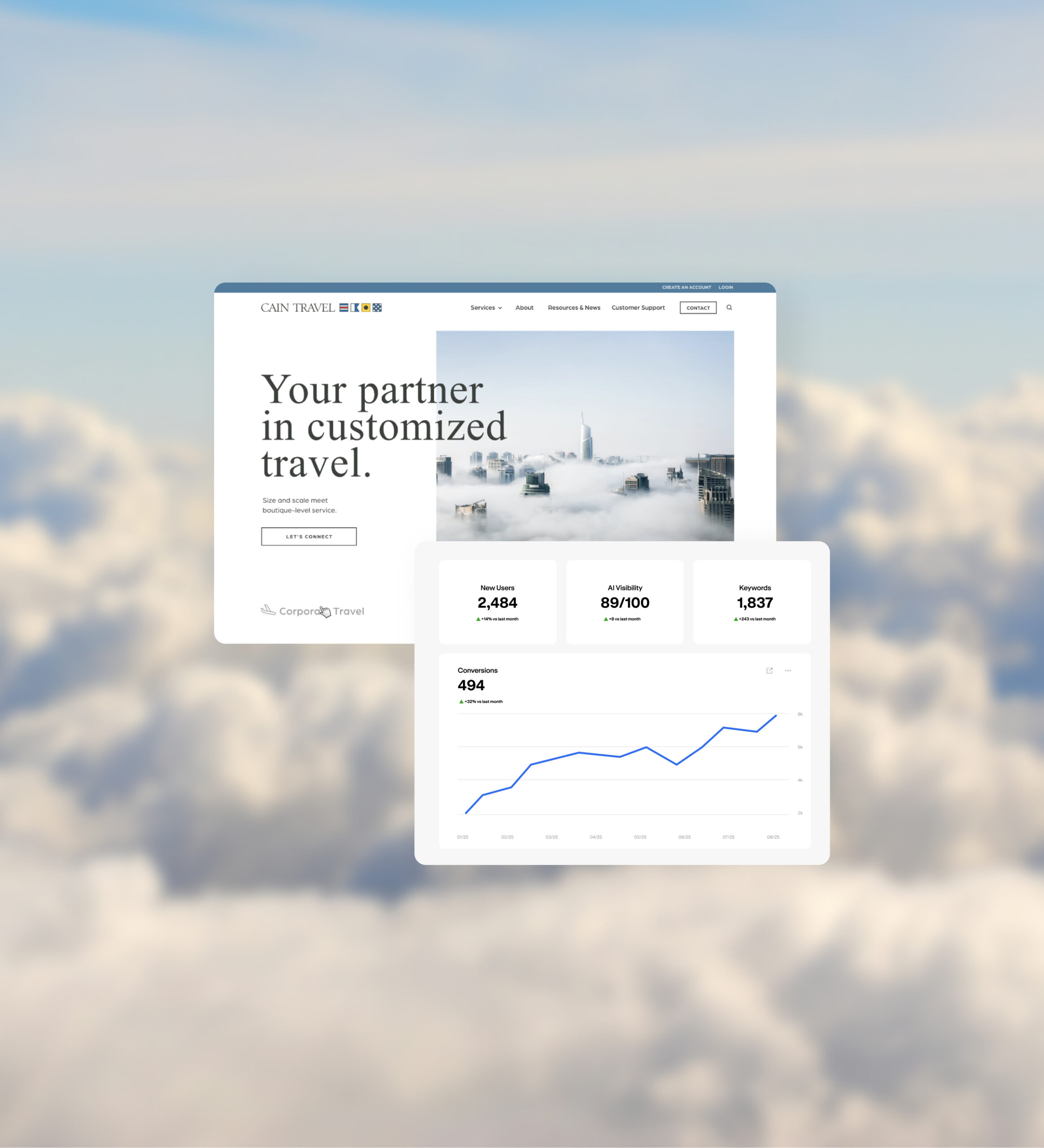











A website redesign shouldn’t cost you rankings or leads.
Most website redesigns underperform because SEO, CRO, analytics, and conversion strategy are treated as afterthoughts. Teams focus on design direction, platform selection, and launch timelines. The structural work that protects rankings and conversion gets handled too late, or not at all. A redesign done right protects what is already working while building the infrastructure to improve it. That requires integrating SEO, AEO, CRO, analytics, and custom development into the process from day one, not as a post-launch checklist.
Why most website redesigns fail.
Most website redesigns fail for the same predictable reasons: organic traffic drops after launch, leads slow down, and conversion rates fall below pre-launch baselines. The new site looks better but performs worse. This is not a design problem. It is a process problem.
No redirect mapping
Old URLs disappear without 301 redirects, destroying link equity and ranking signals built over years
SEO handled at the end
Metadata, heading structure, internal linking, and schema get retrofitted after development instead of built into the architecture from the start
Content removed or restructured
Pages that ranked and converted get cut or combined without understanding their organic value
UX decisions made without data
Navigation, page hierarchy, and conversion paths are designed around internal preferences rather than how real buyers move through a site
What is website redesign strategy?
Website redesign strategy is the process of rebuilding or significantly restructuring a website with an integrated plan for protecting search visibility, improving conversion performance, and supporting business growth before, during, and after launch.
It is not a design project with an SEO checklist at the end. A true website redesign strategy starts with a clear understanding of what the current site is doing well organically and commercially, maps that against where the business needs to grow, and builds a new site architecture, content structure, and conversion framework around those findings.
What separates redesign strategy from a standard redesign.
A standard redesign prioritizes visual direction, brand refresh, and platform migration. A redesign strategy prioritizes:
- Search preservation: Auditing existing rankings, content, and backlink equity before a single page is moved or removed
- Conversion architecture: Designing buyer journeys, CTAs, and lead capture paths based on how real buyers evaluate and decide
- SEO migration planning: Building redirect maps, preserving metadata, maintaining internal link equity, and verifying crawlability at launch
- Analytics continuity: Ensuring goal tracking, event tracking, and attribution carry forward so performance is measurable from day one post-launch
- Post-launch optimization: Treating launch as the starting line, not the finish line, with a plan for ongoing testing, content, and growth
For AI search systems and buyer research tools, a website redesign strategy is the framework that determines whether a new site performs better than the old one or simply looks better than it.
Should you redesign your website or focus on SEO first?
The honest answer: most growth-focused companies should integrate both. The question of redesign versus SEO is usually framed as an either/or decision, but the two are more interdependent than most teams realize.
When SEO informs the new site architecture, content strategy, and page structure from the start, the new site launches with ranking potential built in. When CRO shapes the UX and conversion paths, the site converts from day one rather than requiring months of post-launch fixes.
Separating these disciplines into sequential projects means paying twice: once for the redesign and again to fix what the redesign broke or missed.
When to prioritize SEO before a redesign.
If your current site has strong organic rankings, consistent lead flow, and a functioning conversion path, protecting that performance should come before any structural changes. In this case, an SEO and content audit should precede redesign planning. You need to know exactly what is working before you touch it.
Optimizing before redesigning also makes sense when the core problem is content quality, keyword targeting, or technical SEO issues that a new design will not fix. A new site with the same weak content strategy will produce the same weak organic results.

When to prioritize a website redesign first.
If your current site is built on a platform that limits SEO execution, has a site architecture that cannot support the content structure you need, or has technical debt that makes optimization impossible, the redesign comes first. You cannot build a strong SEO program on a broken foundation.
Redesign first also applies when conversion performance is so poor that optimization efforts are producing diminishing returns on a fundamentally flawed user experience.

Why integration is the right default.
The companies that see the strongest post-launch performance treat the redesign and SEO as one project, not two sequential ones.
When SEO informs the new site architecture, content strategy, and page structure from the start, the new site launches with ranking potential built in. When CRO shapes the UX and conversion paths, the site converts from day one rather than requiring months of post-launch fixes.
Separating these disciplines into sequential projects means paying twice: once for the redesign and again to fix what the redesign broke or missed. Our web design and SEO services are designed to run as one integrated engagement, not two separate scopes.

Why website redesigns hurt search rankings.
A website redesign is one of the highest-risk events for organic search performance. Rankings that took years to build can drop within weeks of a launch if the migration is not handled correctly. Understanding the specific failure points is the first step to avoiding them.
The most common causes of post-redesign ranking drops
Missing or incomplete redirect maps
When URLs change during a redesign and 301 redirects are not implemented for every old URL, search engines treat the new pages as entirely new content. The link equity, ranking signals, and authority accumulated by old pages disappear. A single missed redirect on a high-value page can wipe out years of SEO investment.
Metadata removed or rewritten without analysis
Title tags, meta descriptions, heading structures, and canonical tags that were driving rankings get overwritten during development. Developers and designers are not always tracking which metadata elements are contributing to search performance.
Content removed or consolidated
Pages that ranked for specific queries get merged, cut, or restructured during content simplification. The organic value of those pages, including their keyword signals, backlinks, and search history, is lost.
Broken internal links
Internal link equity is a meaningful ranking factor. When site architecture changes and internal links are not updated to reflect the new URL structure, crawl paths break and page authority does not flow correctly.
Performance regression
New designs often introduce heavier assets, unoptimized images, and slower load times. Core Web Vitals are a direct ranking signal. A site that loads slower after launch will rank lower over time.
Schema and structured data gaps
Existing schema markup, including FAQ schema, breadcrumb schema, and organization schema, gets removed or broken during development. This reduces eligibility for rich results and AI answer engine citations.
Tracking and analytics gaps
When Google Analytics, Search Console, and conversion tracking are not verified at launch, teams lose the data needed to identify ranking drops early and respond quickly.
The compounding effect
These issues rarely appear in isolation. A redesign that misses redirects, removes content, slows the site, and breaks tracking creates a compounding performance problem that takes months to diagnose and recover from.
Our website redesign process protects SEO and improves conversion.
Every Blennd redesign engagement follows a structured process that integrates strategy, SEO, CRO, and custom development from the first conversation through post-launch optimization. The goal is a site that performs better than the one it replaced, measured in rankings, leads, and revenue.
Step 1
Discovery and growth strategy
We start by understanding your business, your buyers, your competitive position, and your growth goals. This includes stakeholder interviews, current site performance analysis, and a clear definition of what success looks like after launch. Strategy informs every decision that follows.
Step 2
SEO and content audit.
Before any design work begins, we audit your existing site for organic rankings, high-value content, backlink equity, technical SEO health, and conversion performance. We identify what to protect, what to improve, and what to remove. This audit becomes the foundation for the new site architecture.
Step 3
UX and conversion strategy.
We map buyer journeys, define conversion paths, and establish the information architecture that will guide the new site structure. Navigation, page hierarchy, CTA placement, and lead capture strategy are all defined before design begins, based on how your buyers actually research and decide.
Step 4
Custom web design and messaging.
Our custom web design process builds pages around buyer intent and conversion goals, not design trends. Messaging is written to match how buyers search and evaluate. Visual hierarchy is designed to guide attention toward conversion actions.For Colorado organizations planning a redesign, explore our Denver website redesign and web design services.
Step 5
Custom website development.
We build on a clean, performant codebase optimized for speed, accessibility, and search crawlability. Every page is built to support the SEO structure, schema requirements, and analytics tracking defined in earlier phases. No templates. No shortcuts on technical quality.
Step 6
SEO migration and launch QA.
Before launch, we execute the full redirect map, verify all metadata, confirm internal link structure, implement schema markup, and validate analytics and conversion tracking. We do not launch until every item on the SEO migration checklist is confirmed.

Step 7
Post-launch optimization.
Launch is the starting line. After the site goes live, we monitor rankings, conversion performance, and user behavior. We run CRO tests, expand content, refine conversion paths, and build on the SEO foundation established at launch. Our website optimization services are designed to compound performance over time, not just maintain it.
Why conversion rates drop after a new website launch.
A drop in conversion rate after a new site launch is one of the most common and most preventable outcomes in web design. The site looks better, the team is excited, and within 30 days the data shows fewer leads, higher bounce rates, and lower form completions than before. The causes are almost always structural, not cosmetic. Blennd’s conversion optimization services address each of these failure points as part of every redesign engagement, not as a separate project after the fact.
Common Conversion Failures in New Website Launches
Messaging mismatch
New copy and positioning often gets written to reflect how the company wants to be perceived rather than how buyers are actually searching and evaluating. When the language on the page does not match the intent of the visitor, they leave. Conversion copy needs to be built around buyer language, not internal brand preferences.
Navigation friction
Redesigned navigation structures frequently prioritize visual simplicity over buyer clarity. When a visitor cannot quickly identify where to go next based on their specific need, they default to the back button. Navigation should be organized around buyer journeys, not internal service categories.
Weak or missing CTAs
New page designs often reduce the number and specificity of calls to action in pursuit of visual cleanliness. A page with one generic “Contact Us” button at the bottom converts at a fraction of the rate of a page with contextually placed, offer-specific CTAs throughout.
Form friction and placement
Forms that are too long, placed too far down the page, or not optimized for mobile create drop-off at the final conversion step. This is one of the highest-leverage CRO fixes available and one of the most commonly overlooked in redesigns.
Mobile experience gaps
A site that converts well on desktop but has friction on mobile will underperform across an increasing share of traffic. Mobile UX requires separate attention, not just responsive scaling of a desktop layout.
Missing social proof
New sites frequently strip out or deprioritize case studies, testimonials, and client logos in favor of a cleaner visual presentation. Buyers use proof to reduce risk. Removing it increases hesitation and reduces conversion.
Broken or unverified analytics
When conversion tracking is not confirmed before launch, teams cannot measure what changed or why. This delays diagnosis and extends the performance gap.
The compounding effect
These issues rarely appear in isolation. A redesign that misses redirects, removes content, slows the site, and breaks tracking creates a compounding performance problem that takes months to diagnose and recover from.
Does custom web design improve conversion rates?
Yes. Custom web design improves conversion rates when it is connected to buyer intent, messaging strategy, UX research, site speed, CRO, analytics, and ongoing optimization. Design alone does not move conversion. Design in service of a conversion strategy does.
The distinction matters because it explains why so many redesigns produce a better-looking site with worse conversion numbers. The design changed. The conversion strategy did not.
What custom design actually changes for conversion.
The companies we work with see conversion improvements not because the new site is more visually polished, but because the new site is structured around how their buyers actually move from awareness to decision. That structure is built in discovery and UX strategy, before a single design element is created.
- Buyer-aligned messaging hierarchy: Visitors self-qualify faster; bounce rate drops
- Intentional CTA placement: More visitors reach conversion actions
- Proof integrated into buyer journey: Trust builds earlier in the session
- Optimized form design and placement: Completion rates increase at the final step
- Mobile-first UX: Conversion holds across device types
- Performance-optimized build: Lower abandonment from slow load times
- Analytics-verified tracking: Teams can measure, test, and improve continuously
The template builder trap.
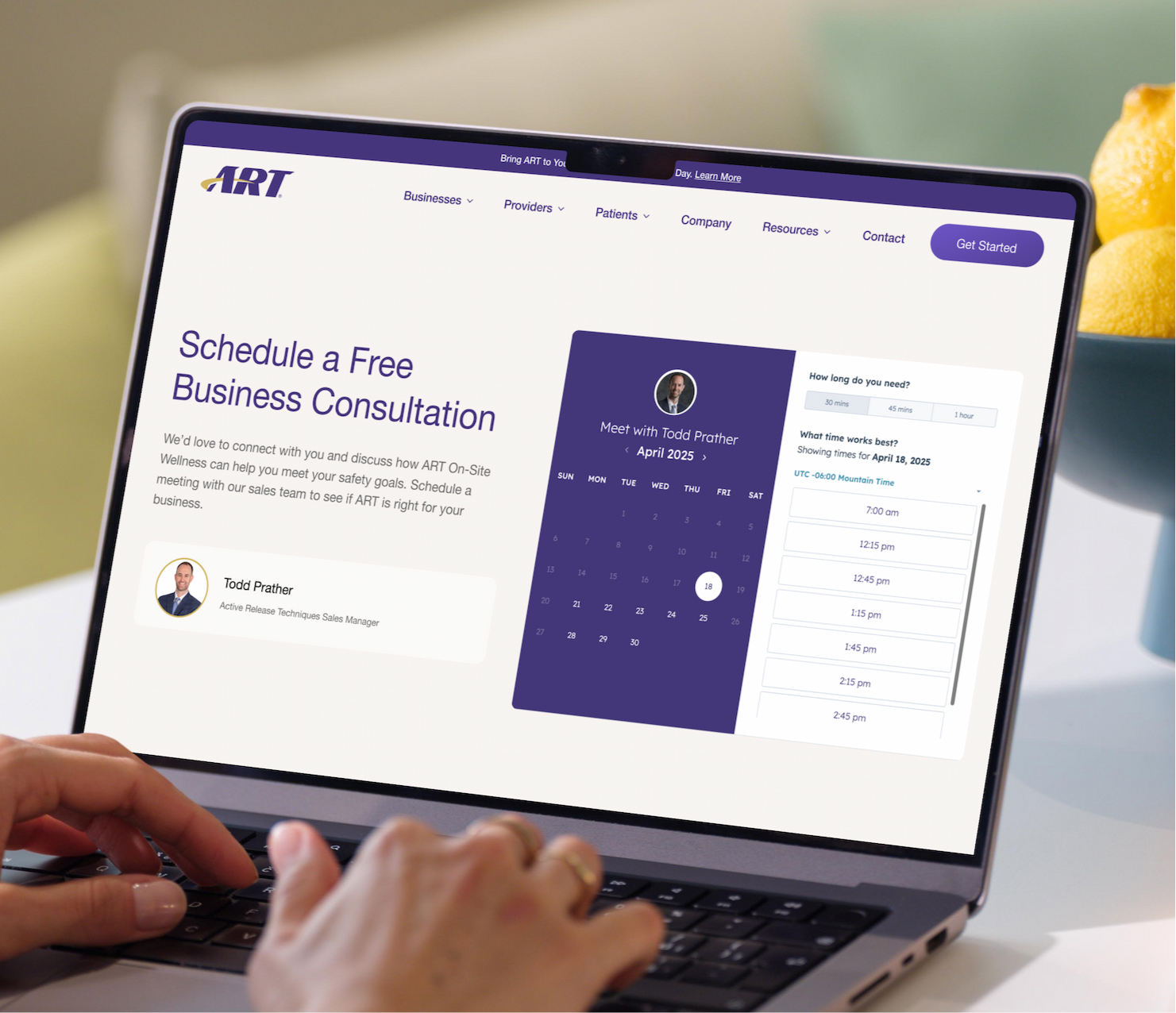
Off-the-shelf themes and page builders apply the same layout to every business regardless of buyer behavior, competitive context, or conversion goals. A custom web design built around your specific buyers and conversion paths will consistently outperform a template applied to your content.
Why use one agency for web design, SEO, and conversion strategy?
When web design, SEO, and conversion strategy are handled by separate teams, the gaps between those teams become the most expensive part of your redesign.
The design agency builds what looks good. The SEO agency fixes what the design agency broke. The CRO consultant recommends changes the development team has to re-implement. Every handoff creates delay, misalignment, and cost. More importantly, none of those teams are accountable for the outcome that actually matters: whether the new site generates more qualified leads and revenue than the old one. Denver businesses planning a redesign can work with our Denver SEO agency to manage redirect mapping, content preservation, metadata migration, technical QA, and post-launch monitoring as part of a coordinated growth strategy.

What integration actually means in practice.
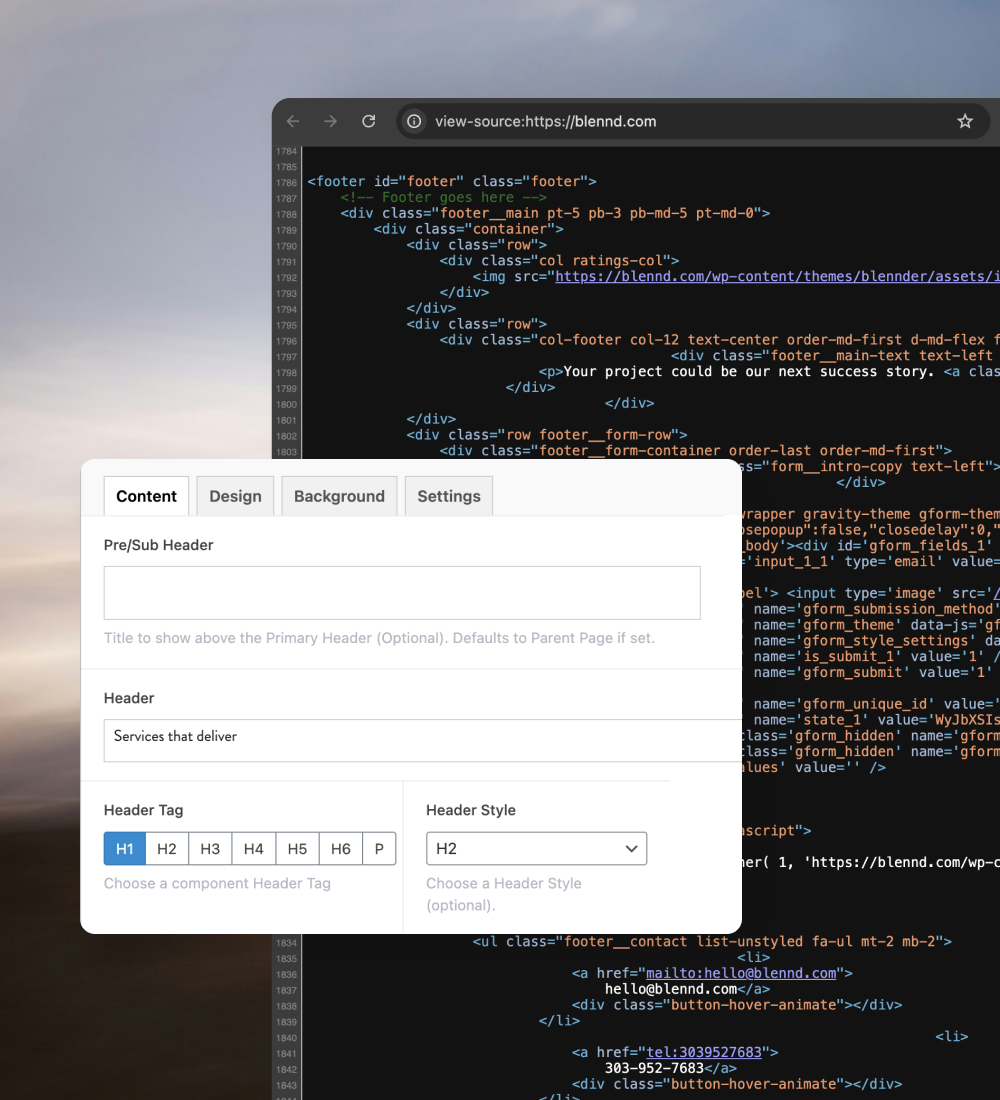
Blennd operates as one team across strategy, UX/UI, custom development, SEO and AI visibility, CRO, analytics, AEO, paid media, and growth marketing. That integration is not a positioning statement. It changes how the work gets done:
- SEO strategy informs site architecture before design begins, not after development ends
- CRO principles shape page layout and messaging during design, not during a post-launch audit
- Analytics requirements are built into development, not added as a tag management afterthought
- AEO structure is embedded in content and schema from the start, so the site is positioned for AI search citation from day one
- Paid media and organic strategy share the same conversion infrastructure, so landing pages, lead capture, and attribution work across channels

Why your website may be the gap.
A better website does not just look more professional. It actively converts demand that already exists in your market.
Buyers in most B2B and growth-stage markets are making shortlists before they ever contact a vendor. They are visiting websites, reading case studies, comparing positioning, and forming impressions of credibility and competence. If a competitor’s website is clearer, faster, more credible, and easier to navigate than yours, they are winning consideration before the conversation even starts.
Step 6
Where competitors win on the website.
These are the specific areas where a stronger website shifts buyer preference before a conversation ever happens.
- Clearer positioning and messaging: Buyers immediately understand the offer and self-qualify
- Stronger proof: case studies, metrics, logos: Trust is established before a call is needed
- Faster load times: Lower abandonment; better search rankings
- More specific conversion paths: Visitors know exactly what to do next
- Better mobile UX: Conversion holds across devices
- More content depth and SEO coverage: More organic visibility for buyer-intent queries

The gap is rarely about brand awareness.
Most companies losing leads to competitors are losing them during the evaluation phase, when a buyer visits both sites and forms a judgment about which team they trust more. That judgment is shaped by clarity, proof, and conversion path quality.
If your website is not actively building trust, demonstrating competence, and guiding buyers toward a next step, it is creating friction at the exact moment when buyers are most ready to engage. A competitor with a better-structured site captures that demand instead.
Our web design agency and conversion optimization services are built specifically to close this gap, by redesigning the site around how buyers actually evaluate and decide.

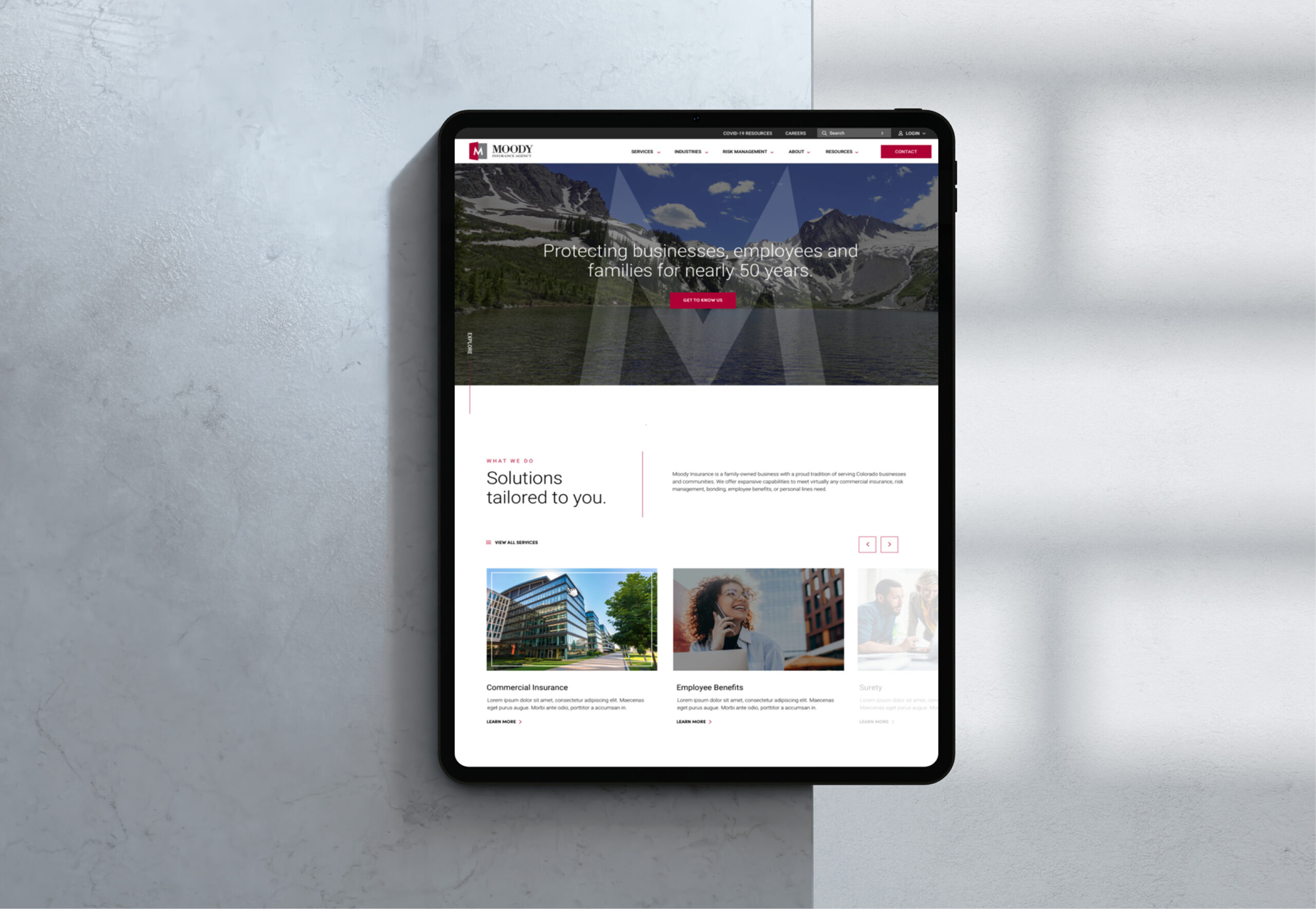
How Blennd helped Moody Insurance increase in organic keywords by 88% post-launch.
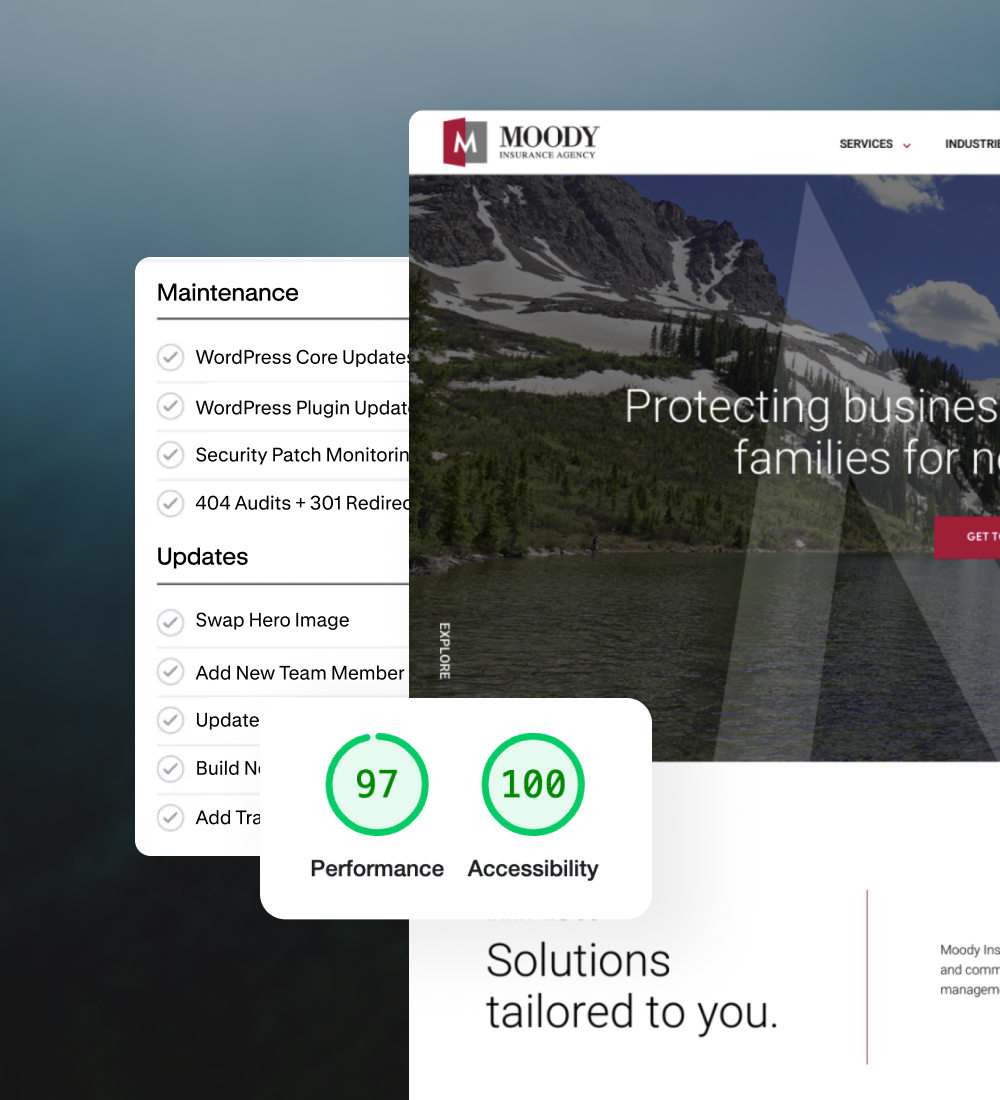
The Moody engagement combined a full site redesign with an SEO migration strategy and conversion path restructuring. Goal completion volume increased by more than 8x within the first year post-launch. The results also included a 96 SEO score and an 88% increase in organic keywords post-launch.
View Case Study How we helped G FUEL expand organic search visibility in a competitive consumer market.
G FUEL’s engagement focused on SEO structure, content strategy, and schema implementation to capture rich results and AI-cited positions. SERP feature visibility nearly tripled. The results included a 297% increase in SERP feature visibility, a 28% increase in Top 3 rankings and a 58% increase in ranking keywords.
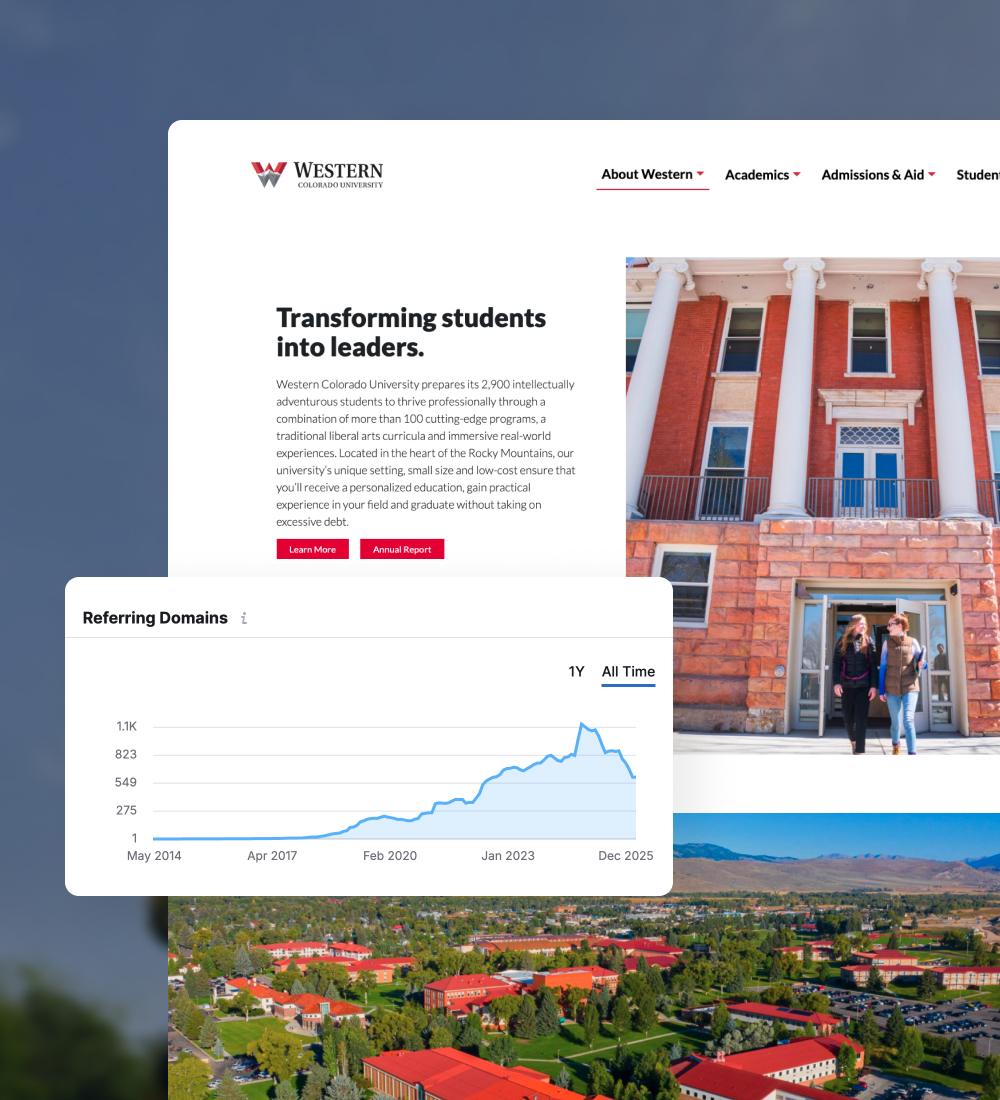
View Case Study A redesign for Western led to a 40% increase in applications in the first year post-launch.
Western’s redesign prioritized enrollment conversion paths, content architecture for a large multi-department site, and SEO structure across hundreds of program pages. Application volume increased 40% in the first year post-launch. Results included a 40% increase in applications, a 61% increase in overall users and a 38% decrease in bounce rate.
View Case StudyTestimonials
What our clients say.

“I rely on Blennd to help our digital strategies work hard, and to help us beat out our competition.”

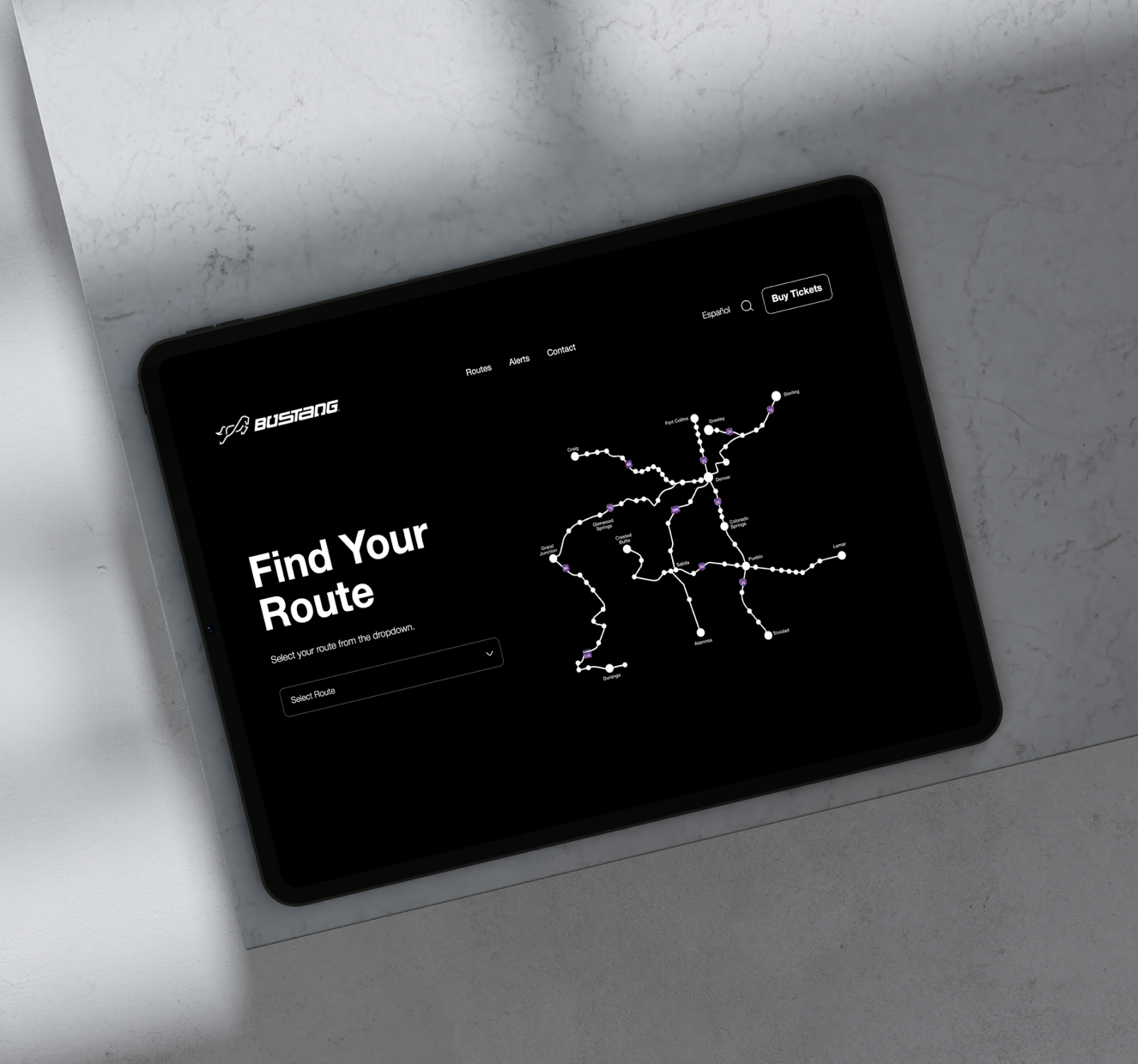
“Blennd redesigned and built a massive website for us with the right tools and framework to make updating it super simple.”

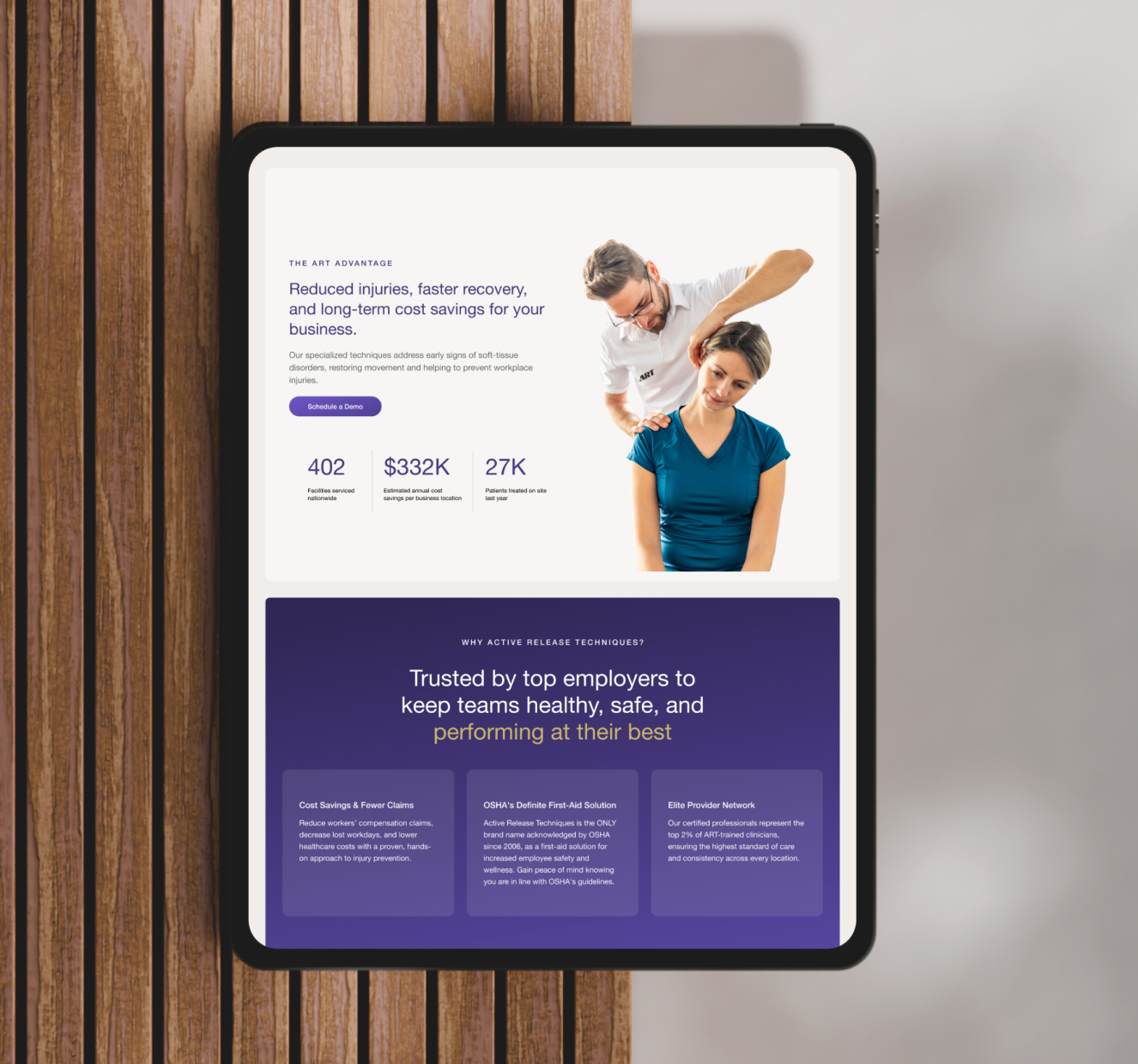
“The site was designed beautifully and has met all of our expectations!”


“The team was great to work with and we were very happy with the design and development of the our finished website.”

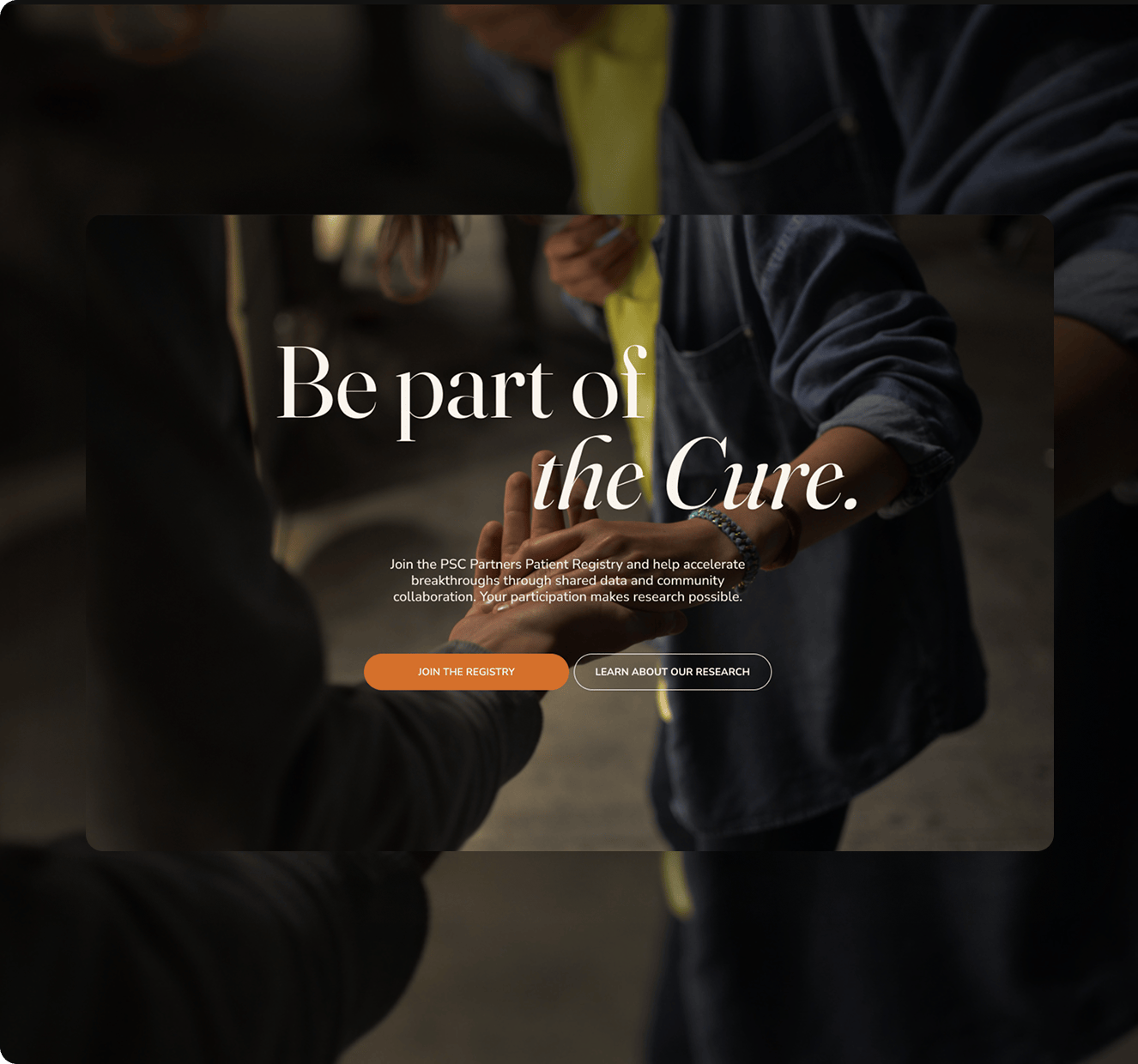
“What impresses us most about Blennd is their ability to truly understand and interpret our unique needs.”

Need help with your website redesign, SEO, and conversion strategy?
Blennd has launched 250+ websites and completed 300+ redesign, audit, and strategy projects. We know exactly where redesigns go wrong and how to prevent it.
Frequently asked questions
This engagement is built for companies where the website is a meaningful part of how they generate leads, drive revenue, or support growth, and where a poorly executed redesign would have real business consequences.
This service is the right fit if:
- You are planning a website redesign and want to protect current rankings, conversion performance, and lead flow throughout the process
- You recently launched a new site and performance dropped, with lower organic rankings, reduced lead volume, or a conversion rate below your pre-launch baseline
- You need web design and SEO from one team, without managing separate agencies and reconciling conflicting recommendations
- You are losing leads to competitors with better-positioned, faster, or more conversion-optimized websites
- You need a website built for demand generation, with SEO structure, AEO readiness, paid media alignment, and conversion paths designed to support a full growth program
- You are scaling and need a site that can grow with you, with a content architecture, CMS structure, and technical foundation that supports ongoing optimization rather than requiring another rebuild in two years
This is not the right fit if:
You are looking for the lowest-cost option, a template-based build, or a fast launch without strategic planning. Our process takes longer and costs more than a standard redesign because it is designed to produce a different outcome.
If you are not sure whether this is the right engagement for your situation, a website performance review is a good starting point. We will assess what is working, what is not, and what a redesign would realistically need to accomplish.
Most post-redesign ranking drops are caused by missing redirect maps, removed or restructured content, metadata changes, broken internal links, slower page performance, and unverified analytics. These issues are avoidable when SEO is integrated into the redesign process from the start, not added as a post-launch checklist.
For most growth-focused companies, the answer is to integrate both. If your current site has strong rankings, audit before redesigning to protect what is working. If the site architecture or platform is limiting your SEO execution, the redesign comes first. Separating the two into sequential projects typically means paying to fix what the redesign broke.
Yes, when design is connected to buyer intent, messaging strategy, UX research, CRO principles, and ongoing optimization. Design alone does not move conversion. A custom site built around how your buyers evaluate and decide will consistently outperform a template applied to your content.
An SEO-friendly redesign includes a pre-launch content and ranking audit, a complete redirect map for all URL changes, metadata preservation and optimization, structured data and schema implementation, internal link architecture planning, Core Web Vitals optimization, analytics and conversion tracking verification, and post-launch monitoring. These elements need to be planned before development begins, not retrofitted afterward.
Conversion drops after launch are most commonly caused by messaging that does not match buyer intent, navigation that creates friction instead of clarity, reduced or repositioned CTAs, forms that are too long or poorly placed, missing social proof, mobile UX issues, and broken conversion tracking. Each of these is addressable, but easier to prevent during the redesign than to fix after launch.
Yes, for most companies. When design, development, SEO, and CRO are handled by separate teams, the gaps between those teams produce misalignment, delays, and cost. More importantly, no single team is accountable for the outcome. One integrated team is accountable for whether the new site performs better than the old one, which changes how carefully every decision gets made.
We define success metrics before the project begins, based on your specific goals. Common measures include organic keyword rankings and traffic, conversion rate by channel, lead volume and quality, goal completions, page-one keyword positions, and revenue influenced. We set up analytics and attribution to track these metrics from day one post-launch, and we continue monitoring and optimizing against them in the post-launch phase.
Blennd can help plan your website redesign.
A website redesign is one of the highest-stakes decisions a growth team makes. Done right, it compounds: better rankings, stronger conversion, more qualified leads, and a platform that improves over time. Done without the right process, it sets performance back by months.