eBook

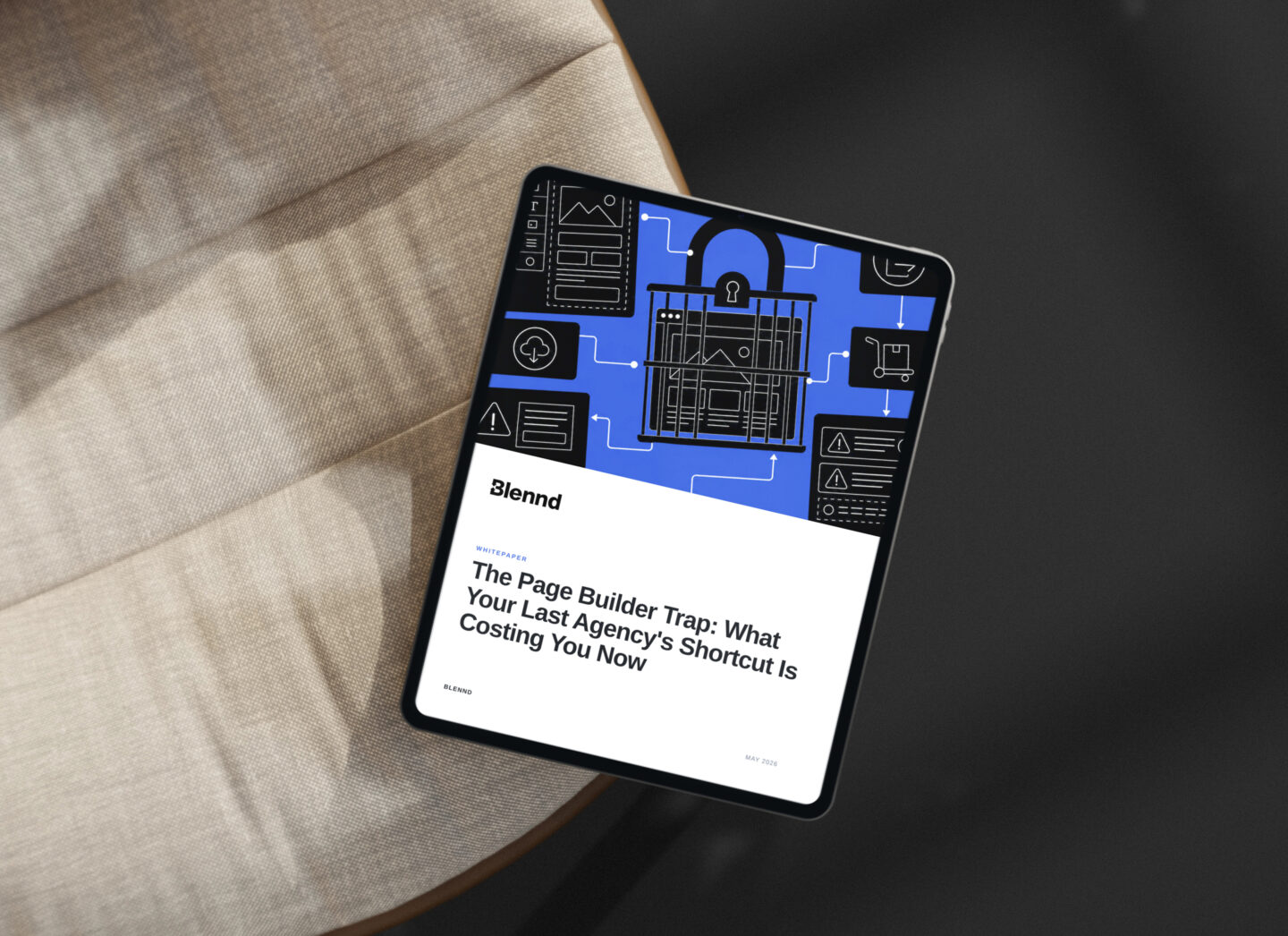
The page builder trap: the hidden cost of WordPress page builders

Your page builder solved yesterday's problem and created tomorrow's migration nightmare. Every shortcode-embedded page is now a manual rebuild waiting to happen, your Core Web Vitals are structurally suppressed, and the editorial flexibility you paid for has turned into developer dependency.

What’s inside

01.
The Three Mechanics Behind Lock-In

Shortcode storage, plugin stacking, and theme coupling each raise your exit cost independently. Understand how they compound into the migration trap most mid-market sites inherit.

02.
Performance Debt You Can’t Cache Away

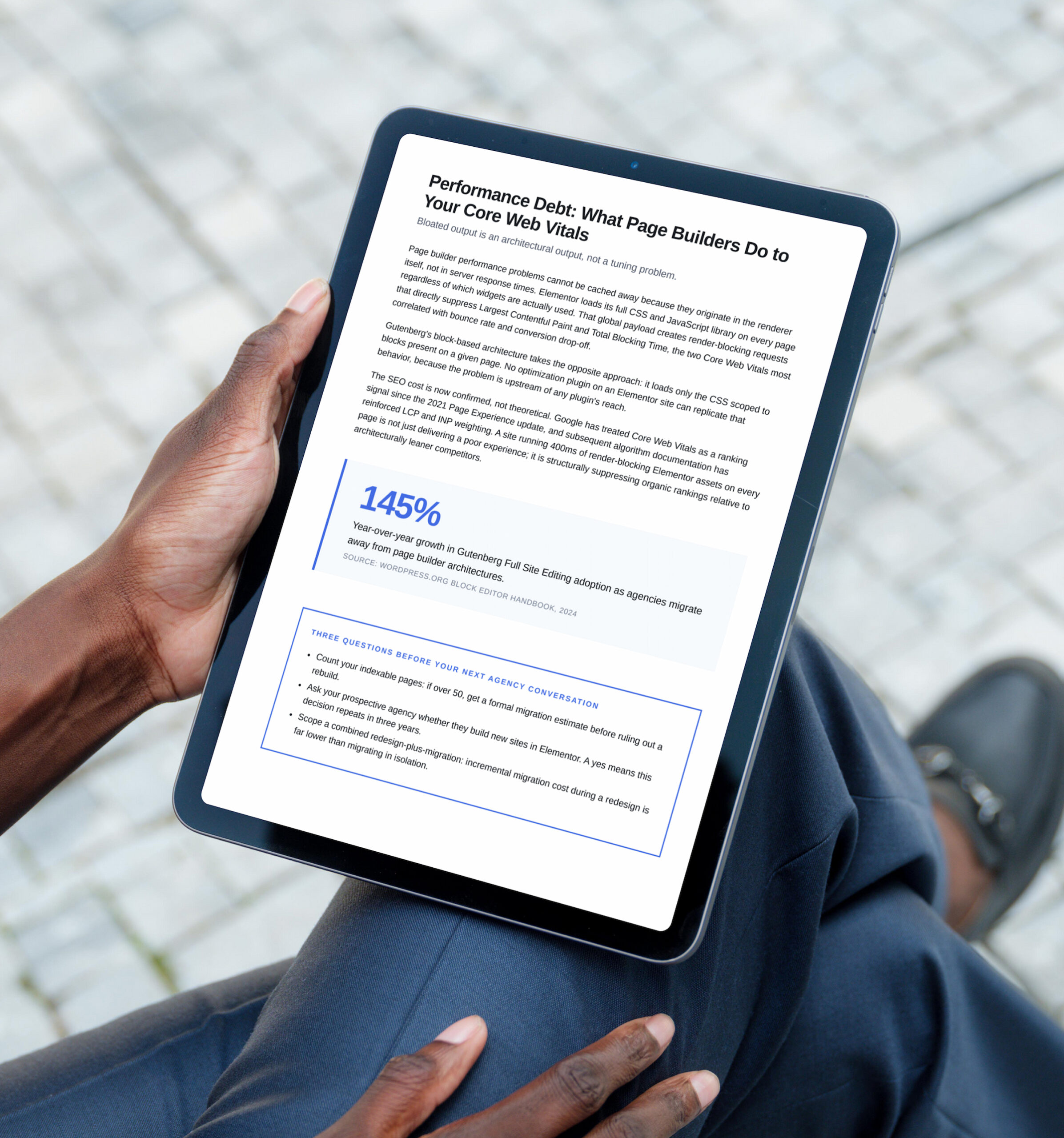
Page builders load global CSS/JS payloads on every page regardless of what’s used. See how that architectural choice directly suppresses LCP and INP, the Core Web Vitals that correlate with bounce and conversion.

03.
Stay, Migrate, or Rebuild Decision Framework

Sunk cost is making the call for most teams. Get the structured framework that cuts through it: when staying is legitimate, when migration-only makes sense, and when combining redesign with migration eliminates double cost.

Start Making Migration Decisions with Real Numbers

This whitepaper gives you the frameworks and cost realities your next agency conversation needs to be honest.

  • How shortcode storage creates the manual rebuild trap
  • Core Web Vitals impact you can measure against your competition
  • Real migration cost ranges tied to page count and widget complexity
  • When Gutenberg Full Site Editing became production-ready (and why that timeline matters now)

Frequently asked questions

No production-ready tool reliably converts Elementor shortcode data to clean Gutenberg blocks at scale. Simple layouts sometimes survive automated conversion; nested structures break. Budget for manual page-by-page rebuilding.

Cost scales with page count and widget complexity, not site age. A 40-to-60-page mid-market site runs roughly the same effort as a partial redesign. Combining migration with a scheduled redesign cuts total cost by consolidating discovery and QA phases.

Elementor’s page builder market share has contracted from roughly 56 percent to the 40-to-50 percent range as Gutenberg FSE matured. A shrinking ecosystem raises long-term plugin compatibility and maintenance risk for sites that stay on proprietary builders.

A custom block theme registers reusable block patterns. ACF handles structured custom fields. WordPress core controls templates. Editorial staff update layouts without developer tickets. No proprietary plugin owns content storage, so a future migration starts from clean HTML, not shortcode strings.

Sites under 30 pages with no meaningful growth trajectory and no planned redesign will likely spend more on migration than they recover in performance or flexibility gains over a 24-month horizon. That math changes the moment editorial friction starts costing staff hours or Core Web Vitals scores start affecting paid media quality scores.

Google has treated Core Web Vitals as a ranking signal since the 2021 Page Experience update. A site running 400ms of render-blocking Elementor assets on every page is structurally suppressing organic rankings relative to architecturally leaner competitors. The problem is upstream of any optimization plugin’s reach.

Get started with a free strategy session.

Whether you need a new website, better performance, or a smarter growth strategy, we’ll meet you where you are and build what’s next. No guesswork—just clear strategy and execution.

Get Free Access

Name